
AquaOil srls
Via Terracina 27, 00177 Roma (Italia)
C.F. - P.IVA - № registro imprese 16213571009
Numero REA RM - 1641982
www.aquaoil.info – pec : aquaoil@pecodc.it
Email: info@aquaoil.it
Telefono: +39 349 342 3348
Applied research for innovation and development
AquaOil
CONVERSION OF NATURAL GAS, BIOGAS AND ANY MIXTURE OF HYDROCARBONS, INTO SYNGAS
PRODUCTION OF HYDROGEN, DIMETHYL ETHER (DME), METHANOL OR DIESEL
Incomplete gas oxidation with porous matrix and infrared burner
The aim of the proposed technology is to convert any hydrocarbon mixture, gaseous or in aerosol dispersion, into a synthesis gas (SYNGAS = a compound of carbon monoxide and hydrogen : CO + H2), any mixture of hydrocarbons, gaseous or in an aerosol dispersion, to then obtain various fuel products, such as hydrogen (with the aid of an additional water injection block and a catalyst, which also increases the hydrogen yield), or dimethyl ether or “DME” (with the addition of a catalytic reactor), or even methanol and diesel.
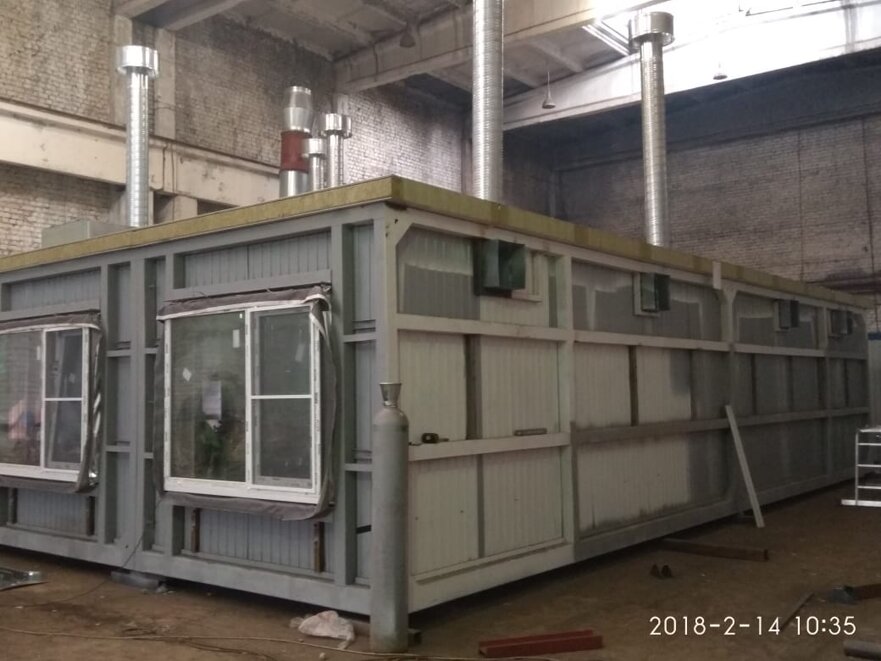
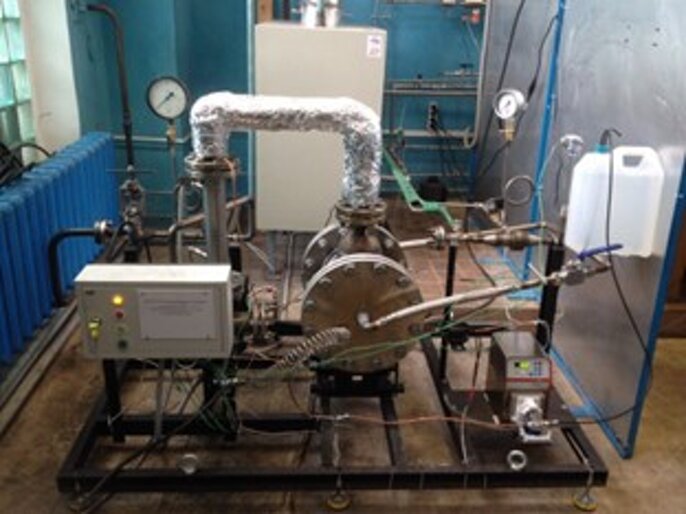
demonstration plant with a capacity of 30 m3 of synthesis gas per hour
The method, which is original and innovative, consists of passing the hydrocarbon mixture through a special porous material (“matrix”) composed of pressed metal wire with a high melting point and then subjecting it, in the presence of an oxidant (air, oxygen-enriched air or oxygen), with a special flameless infrared burner, to an incomplete oxidation, which is necessary to obtain carbon monoxide (CO), as well as hydrogen, instead of carbon dioxide (CO2, non-combustible) as in the case of a complete oxidation, with a normal gas burner, during which water vapour and carbon dioxide are produced (as an example, here is the formula of the methane reaction СН4+2О2 = 2Н2О+СО2).
Experiments and tests conducted on demonstration plants with 10 to 20 m3/h gas input and at different pressures, from 1 to 10 atmospheres, have shown that the synthesis gas produced has a hydrogen concentration of about 56%, while carbon monoxide is about 30%, with a H2/CO ratio of more than 1.8. The remaining 10-14% consists of oxygen and unconverted syngas.
Incomplete oxidation is achieved by maintaining the conversion process at a lower temperature than normal oxidation (1000-1100 C° and pressure 0.1 - 2.0 MPa), thanks to the infrared burner and pre-heating during the passage of gas through the porous “matrix”.
Preheating is achieved by recovering the heat produced by the gas passage through the burner itself. In fact, the proximity of the special flameless burner to the porous ‘matrix’ allows the inner walls of the pores, through which the gas passes, to be heated up to a temperature of 800 .- 900 C°, thus becoming a source of heat radiation and raising the temperature of the gas, even before the burner, to 600- 800 C°.
The recovery and utilisation of heat before the burner allows for greater stability of the mixture conversion and a high syngas yield. What's more, without the need for external heat or electricity inputs, the system is thus energy self-sufficient.
In addition:
- the raw material to be processed can be any hydrocarbon composition, gaseous or in aerosol dispersion;
- the process takes place without catalysts;
- the plant is simple and easy to maintain;
- the process is highly efficient: approximately 65 litres per hour of synthesis gas produced per square centimetre of “porous matrix”;
- the specific heat output on the working surface of the “porous matrix” is over 40 watts/cm2.