
AquaOil srls
Via Terracina 27, 00177 Roma (Italia)
C.F. - P.IVA - № registro imprese 16213571009
Numero REA RM - 1641982
www.aquaoil.info – pec : aquaoil@pecodc.it
Email: info@aquaoil.it
Telefono: +39 349 342 3348
Applied research for innovation and development
AquaOil
PRODUCTION OF SYNTHETIC OIL FROM COAL AND BIOMASS
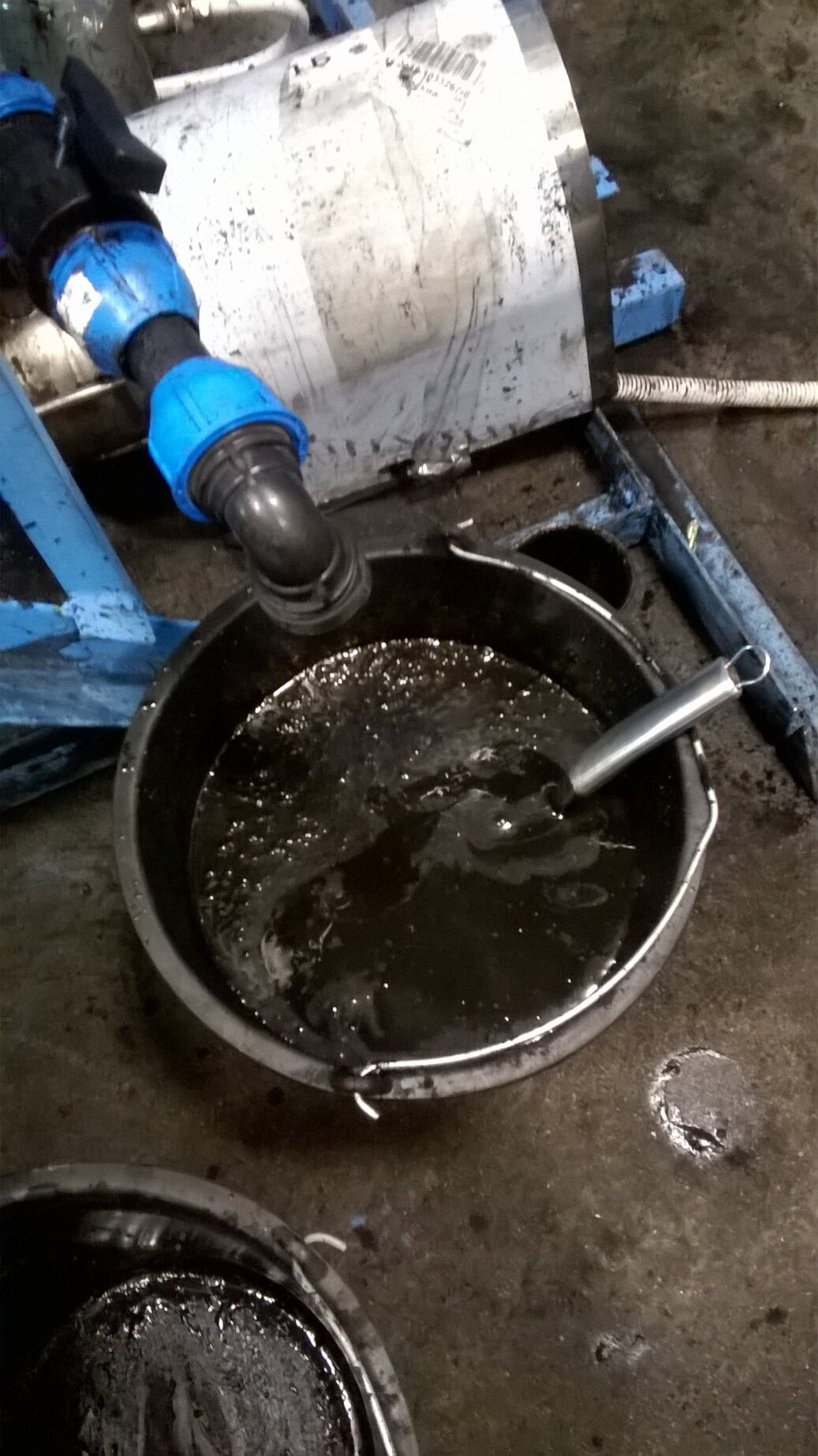
It is possible to convert coal into oil without waiting geological times and without resorting to technologies involving the usual thermochemical processes, such as pyrolysis or gasification: complex, expensive and energy-intensive.
It is an innovative liquefaction process, which consists of the physico-chemical synthesis treatment to which the raw material (in this case coal, but also biomass in general, containing carbon) is subjected, which allows the molecular bonds to be broken and reassembled, resulting in a liquid fuel with the characteristics of oil: a synthetic oil..
The history
This technological process takes its cue from the studies of a Soviet-era Russian scientist (Lev Aleksandrovic Yutkin, 1911 - 1980) who, as early as the 1950s and 1960s, began to develop and experiment with the so-called Electro-Hydraulic Effect theory.
Although his first machines were used to crush stones and ores and process metals and other solid materials, his later applications also found use in other industries, from metalworking to metallurgy and mining, from construction to chemistry and even agriculture. (L.A. Yutkin, 1986, ‘Электрогидравлический эфффект и его применение в промышленности’ - ‘Elektroghidravliceskij effekt i ego primenenie v promyslennosti’ - ‘Electrohydraulic effect and its uses in industry’, Leningrad, ed. Mashinostroenie, p. 253).
Today
Thanks to theoretical work and calculations, accompanied by practical experiments (in particular with lignite) in laboratory plants, our group of experts has been able to prove the validity of the electrochemical liquefaction process and to obtain a product with the physical-chemical characteristics of synthetic petroleum, from which various valuable products (anthracenes (C14H10), naphthalenes (C10H8), benzenes (C6H6), as well as diesel and petrol) can subsequently be obtained with appropriate refining.
The technological process
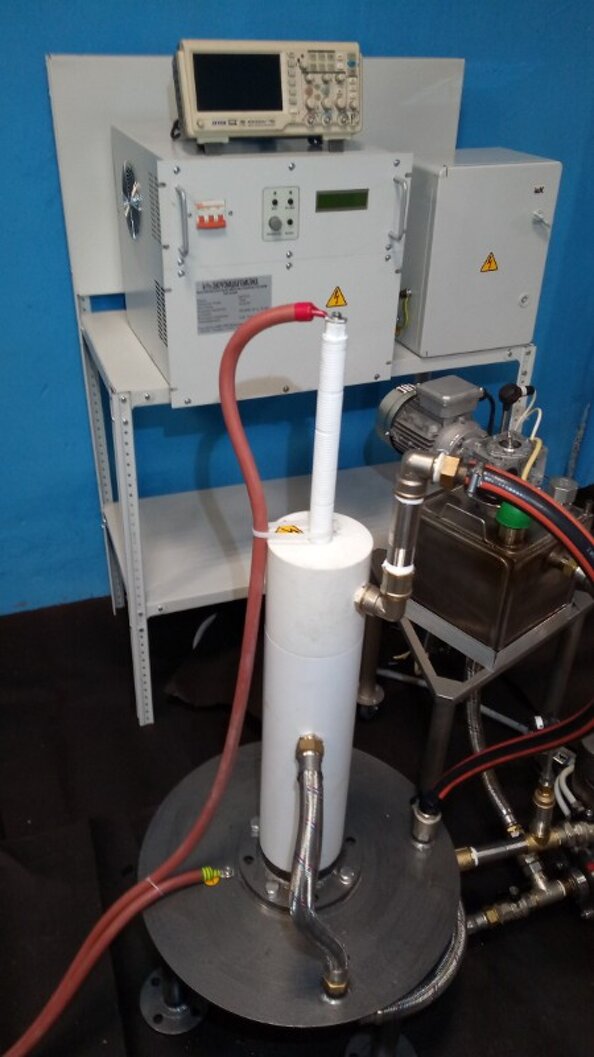
The process of converting the raw material, mixed with water, into liquid hydrocarbons is based on the so-called “electro-hydraulic effect”, which is achieved by a high-voltage pulsed electrical discharge in a flowing liquid environment.
When an electrical discharge occurs in a liquid, energy is released during a fairly short time interval.
Where the discharge is channelled, intense and localised heating of the liquid occurs. In addition, the energy of the superheated ionised gas and vapour is concentrated here.
Under the effect of the pulses, this entire environment is subjected to alternating compression and expansion stresses. In the expansion zones, bubbles appear due to cavitation, which implode under the effect of the reflected wave.
In addition, the powerful, high-voltage electrical impulse, given suddenly, abruptly and not gradually, also causes other physico-chemical effects in the liquid and the bodies in it: a destructive (breaking) electrical charge and the formation of the discharge channel, an intense emission of energy in the channel, the origination of compression waves and pressure pulses that turn into a shock wave, and also infrasound and ultrasound sound waves.
This causes the long molecular chains of hydrocarbons in the raw material to crack, while water molecules break down into hydrogen and oxygen under the effect of the electrical discharge.
In the water-carbon suspension (even with the addition of a small percentage of waste hydrocarbons), during the electrochemical process, the breaking up of the carbon molecules, which appear as a long carbon chain, with the separation of the atomic carbon C, and also the breaking up of the water molecules, with the separation of the atomic hydrogen H, also occurs in the addition of hydrocarbons, the shorter C-H complexes are separated. Water acts as a solvent and hydrogen donor.
The hydrogen molecules (obtained from the hydrocarbons and water) combine with the carbon molecules of the raw material, which leads to its liquefaction in a hydrogen environment (hydrogenation).
Subsequently, the resulting product can also be treated with ultrasound.
The active free radical particles H, O, OH, which are formed near the electrical discharge, act as substitutes (surrogates) in the broken bonds and prevent the recomposition (reconstruction) reactions.
Process parameters
- treatment duration 9 minutes
- average power input ≈ 4÷8 kW;
- raw material size (coal particle size) ≈ 0.2 mm. (200 microns);
The oil obtained is perfectly stable, in fact a sample produced in December and analysed about four months later was identical to that examined at the time of production.
Fractional composition of the product:
30% oil, ether, alcohols, volatile hydrocarbons, synthetic gas;
10% diesel;
10% gasoline
The proposed system is economically sustainable, as it can process low-cost raw material and is not energy intensive.
It is reliable, as it is simple and suitable for even difficult environmental conditions, with a plant operating with non-critical parameters, in particular atmospheric pressure, low temperature and hydrogenation.
The raw material to be used is in line with EU guidelines for “innovative fuels”.