
AquaOil srls
Via Terracina 27, 00177 Roma (Italia)
C.F. - P.IVA - № registro imprese 16213571009
Numero REA RM - 1641982
www.aquaoil.info – pec : aquaoil@pecodc.it
Email: info@aquaoil.it
Telefono: +39 349 342 3348
Applied research for innovation and development
AquaOil
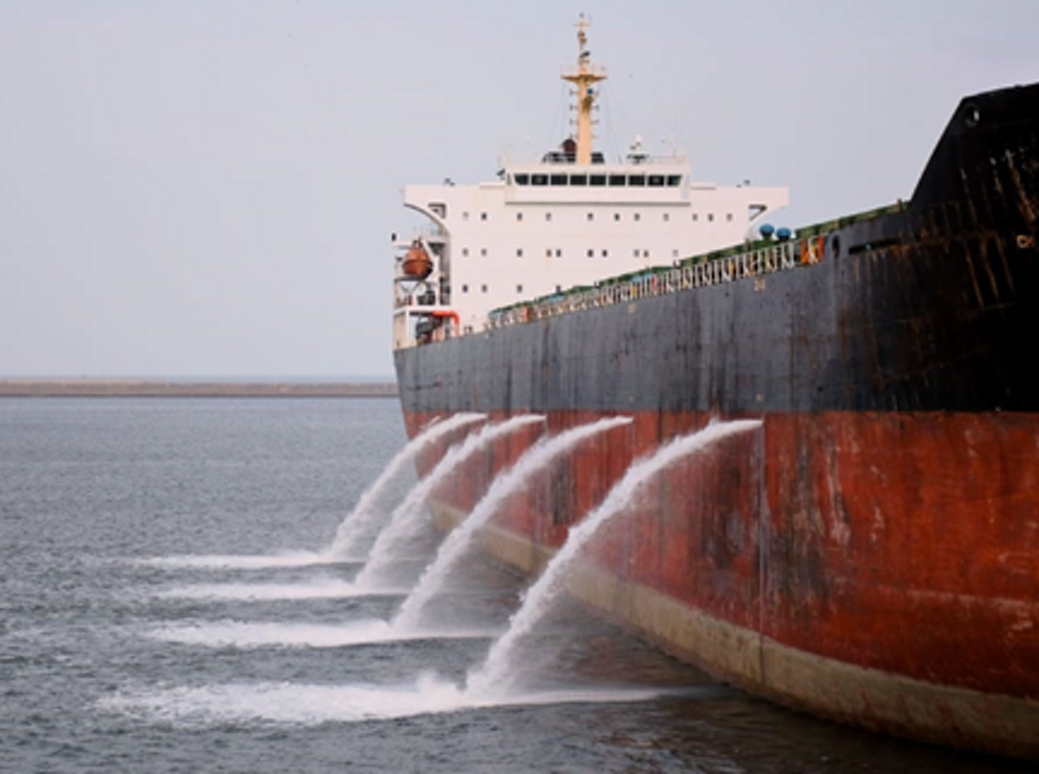
Ballast waters
The technology that AquaOil proposes
instead is based on the combined effects of cavitation and ultrasound, concentrated in a reactor along the water flow, where cavitation bubbles are imploded. These, collapsing, provoke intense and powerful shock waves capable of destroying potentially pathogenic and invasive marine organisms present in the liquid.
The system eliminates, by destroying, every type of organism present in the water: algae, worms, microbes, small invertebrates, crustaceans and larvae, according to the standards required by the 2004 International Convention on Ballast Water Control, which came into force in 2017.
The process is 100% physical, without the use of chemicals (potentially dangerous and toxic for crews and their dispersion in the marine environment) or ultraviolet light systems (particularly sensitive to moisture and ineffective in flowing liquids). It is also less energy intensive than systems using ozone.
System capacities range from 10 to 100 m3/h and can be multiplied with modules.
Any type of sea or river water can be treated, regardless of turbidity (an obstacle for ultraviolet-based systems), temperature (which can interfere with chemicals such as chlorine and ozone) and salinity. A preliminary mechanical filtration down to 500 microns is sufficient.
The technology meets the fundamental requirements of the Convention, i.e:
- safety for the ship and crew;
- environmental safety, no secondary pollution from treated matter;
- cost-effectiveness;
- effectiveness from a biological point of view on the different species of marine organisms to be treated.
In particular, it is a simple, safe and compact system with no potential danger to either ship or crew.
It is easy to install without modifying on-board systems and without having to set up bulky and complex systems, the systems can be housed and suspended along the hull walls. It requires no additional energy consumption beyond the loading and unloading pump, which is in any case provided and already present for any other purification system (only a pump pressure greater than 12/15 atmospheres is required).
It is safe for the environment as it does not produce or release disinfectant chemicals, pollutants or those with side effects into the water or onto the ship.
For these reasons, it is competitive with methods that use chemicals such as chlorine (Sunrui - China, BalClor BWMS - filtration and electrolysis with production of the oxidant sodium hypochlorite and chlorination), which, however, makes the organisms subjected to disinfection toxic and results in the formation of dioxins due to the presence of chlorine, which, once spilled into the sea, enter the food chain via plankton and thus fish.
Ballast waters serve to regulate the distribution and overall weight of the ship, providing the trim stability needed for safe navigation.
It is water stored in the ship's hull to keep the vessel upright and stable. It may also serve to increase the weight of cargo so that the ship can lower and pass under bridges.
Upon arrival at its destination, the ship is emptied and the ballast water is spilled into the sea.
In ballast water, however, potentially harmful and pathogenic aquatic microorganisms and sediments from the place of embarkation are also present. These are foreign organisms, potentially damaging to the marine ecosystem of individual ports, which are released in different places and thus result in the introduction of alien elements into the waters of the seas where the ballast is discharged, with the risk of compromising human health, biodiversity and the entire industrial sector connected to the sea, such as fishing and tourism.
To prevent this type of pollution, the International Maritime Organisation established in 2004
The “International Convention for the Control and Management of Ships” Ballast Water and Sediments' (“Ballast Water Management Convention”, abbreviated as BWMC) requires that before ballast water is released into the sea, it must comply with precise standards dictated by various regulations, both global and local.
A specific plan for the management and treatment of such water, specific to each ship, must therefore be provided for each ship above 400 gross tonnes and must be included in the ship's operational documentation.
Ports must also ensure that appropriate treatment facilities and devices are in place for environmentally safe management.
Each state delegates to various Recognised Bodies statutory certification tasks for ships registered in the country.
The MASE (Ministry of the Environment and Energy Security) has delegated five Recognised Organisations for the activities foreseen by the convention for the certification of ships registered in Italy: “American Bureau of Shipping”, “Bureau Veritas SA”, “DNV”, “Lloyd's Register”, “RINA Services S.p.A.”:
The ballast water treatment system must include water filtration to remove particles and organisms. The main technologies used today are UV irradiation and chemical treatment with ozone or chlorine.
Discharge may take place offshore or within an area designated by the port state.
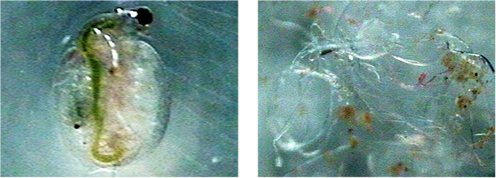
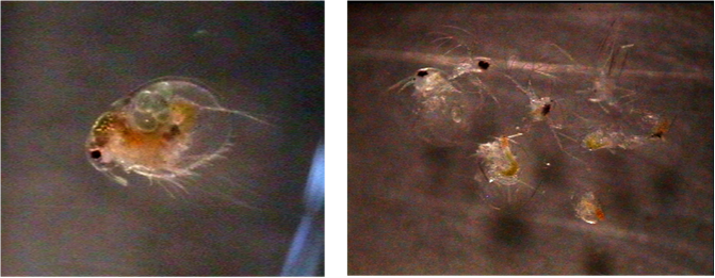
CERIODAPHNIA AFFINIS
before and after treatment
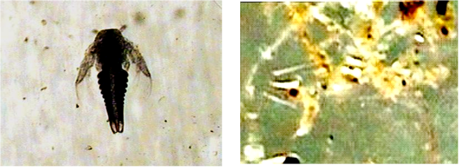
ARTEMIA SALINA
before and after treatment
CYPRINUS SALINUS
before and after treatment
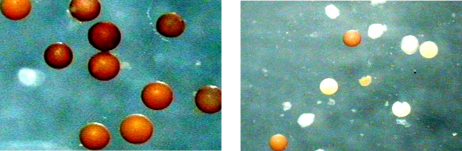
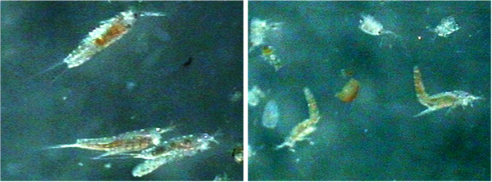
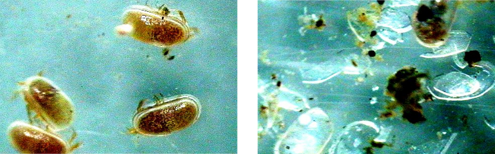
ARTEMIA SALINA
before and after treatment
CLETOCAMPTUS RETROGRESSUS
before and after treatment
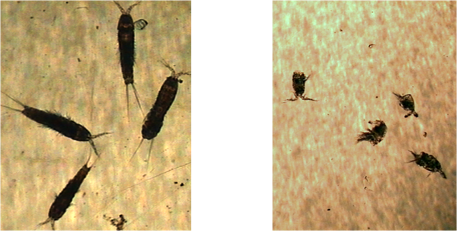
N. spinipes
before and after treatment
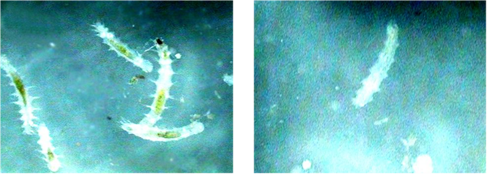
POLYCHAETA sp.
before and after treatment
W. pannonica
before and after treatment